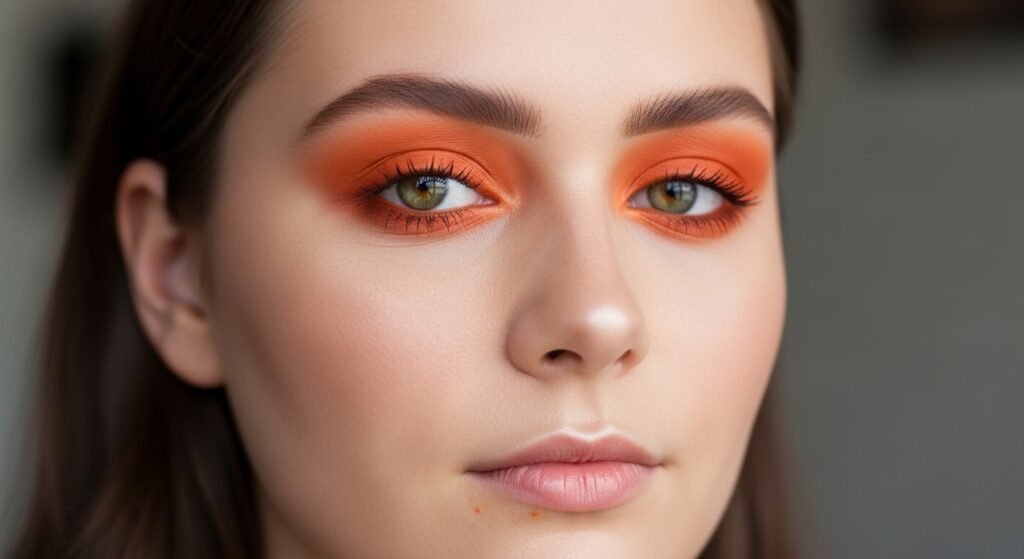
I used to do orange lids that looked great in the mirror and sad by noon. The color would separate or the edges would harden. I felt like the shade was working against me.
I stopped overworking the lid. I learned small moves that keep texture even and edges soft.
How to Blend Orange Eyeshadow for a Smooth Professional Finish
You’ll learn how to make orange read intentional: how I prime for smooth color, where I place warm transitions, and how I keep the lid saturated while the edges stay soft. It’s simple to add to a morning routine and it works on real skin.
What You’ll Need
- Cream eye primer (neutral, lightweight)
- Matte orange eyeshadow (mid-tone warm)
- Warm matte brown (transition shade)
- Small fluffy blending brush (tapered, synthetic)
- Flat dense shader brush (for packing pigment)
- Tapered pencil brush (lower lash and outer corner)
- Long-wear setting spray (light mist)
Step 1: Prime the Lid to Create an Even Base
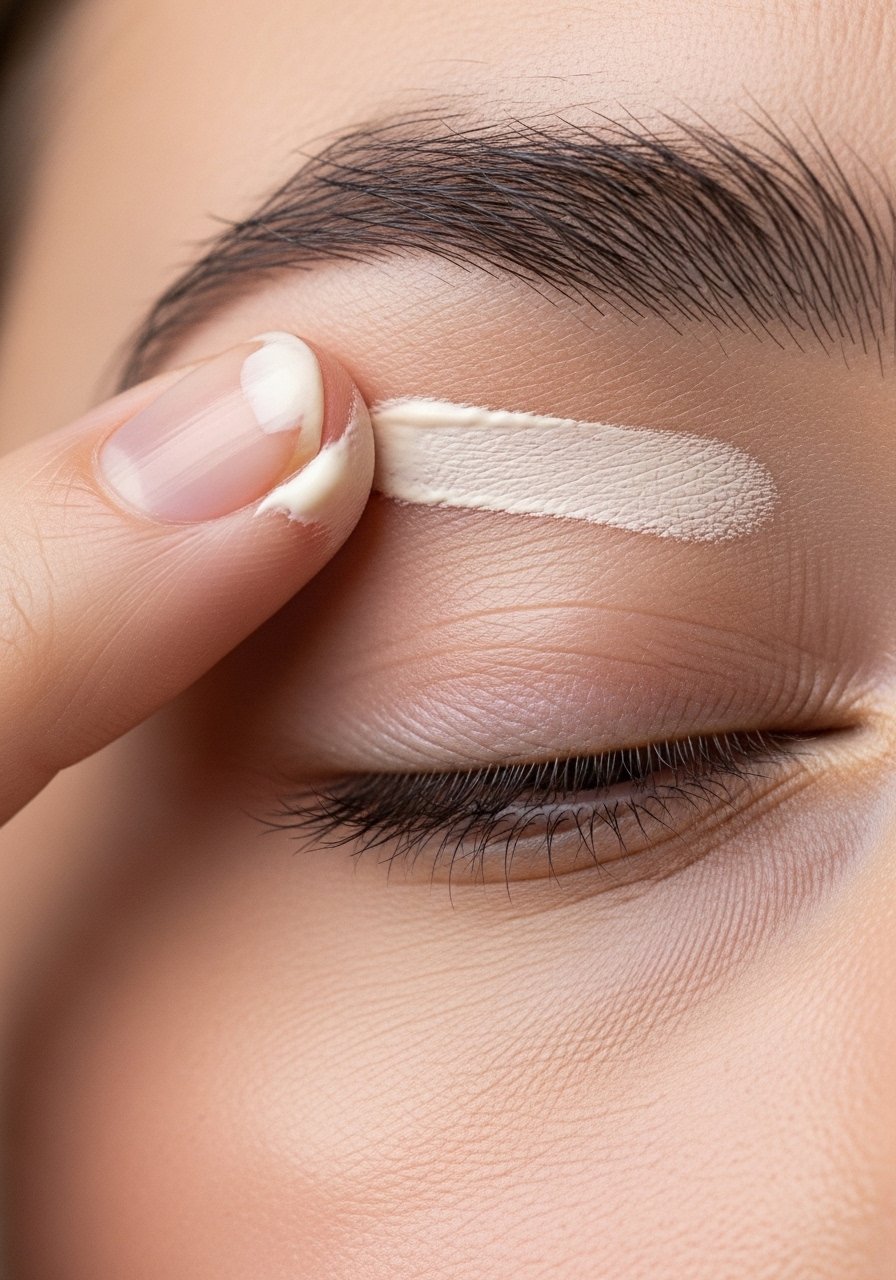
I spread a thin, even layer of cream primer across my lid and up to the brow bone. I tap it in with my ring finger rather than rubbing. The primer evens skin tone and gives the orange something to cling to.
Visually the lid looks smoother and the orange will sit brighter. Emotionally it feels calm—less fiddly later. People miss spreading primer slightly past the socket. One small mistake: using too much primer. That makes powder look patchy. Less product gives a cleaner blend.
Step 2: Lay a Warm Transition to Soften Edges
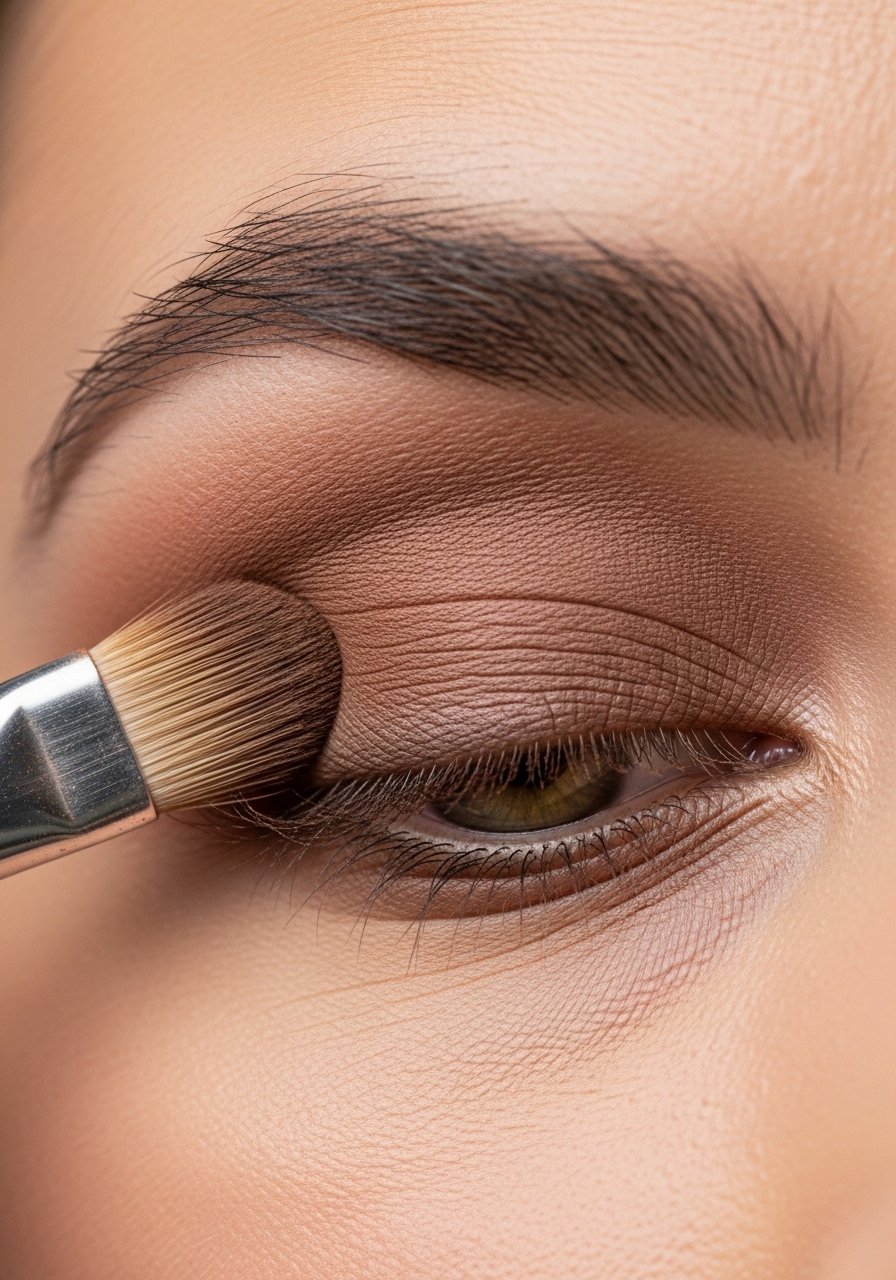
I sweep a warm matte brown through the crease with a small fluffy brush. I keep the movement light and build slowly. This shade acts like a buffer so the orange doesn’t end in a hard line.
You’ll see the eye gain depth without a visible stripe. Most people skip a transition and struggle to blur orange into skin. One mistake to avoid: using a shade that’s too dark or cool. It fights the orange and makes blending harder.
Step 3: Pack the Orange on the Lid for True Color
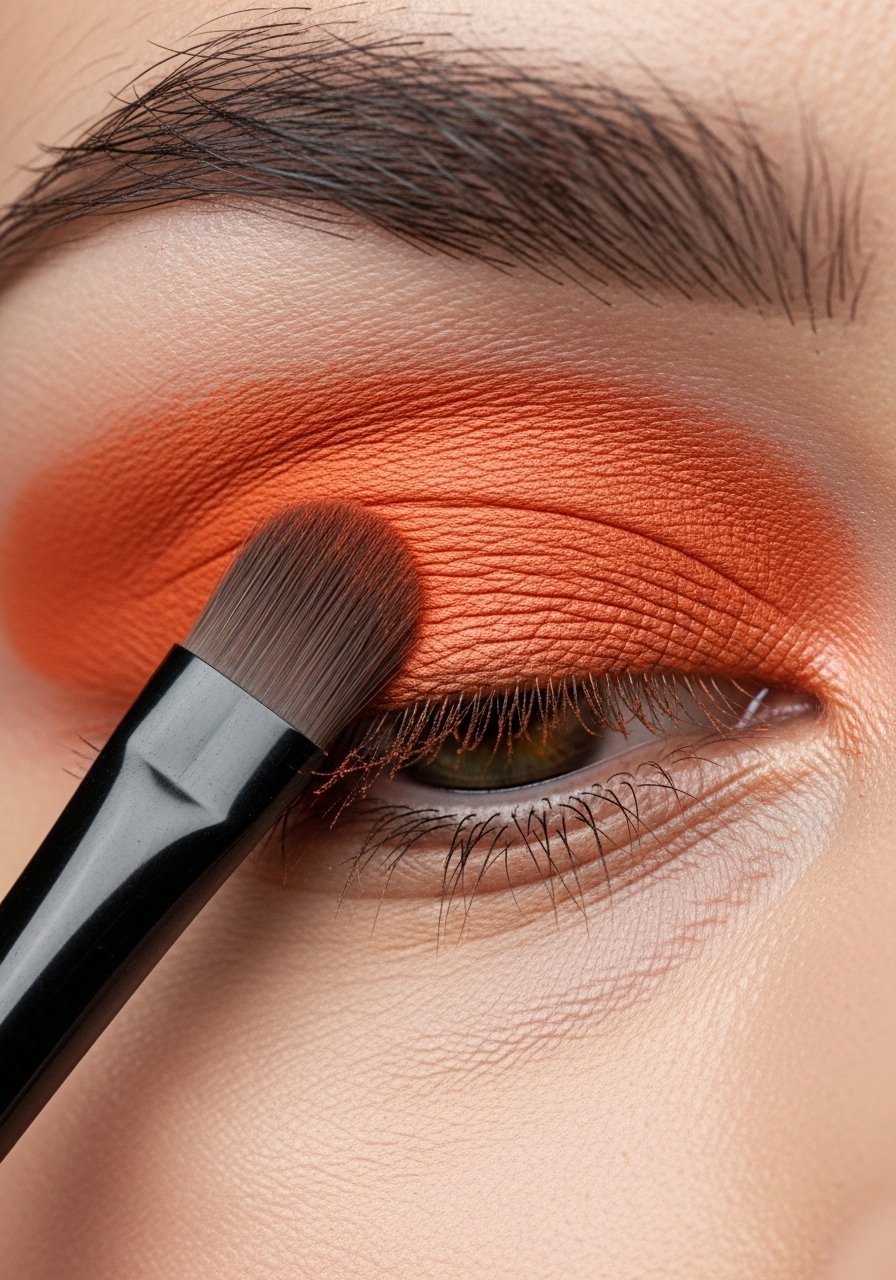
I press the orange onto the center of the lid with a flat brush. I start light and press multiple thin layers. Patting deposits pigment without tugging and keeps texture even.
Visually the lid becomes saturated while the crease stays soft. A tip most miss: build intensity in layers instead of one heavy swipe. One small mistake: sweeping the orange on with the wrong brush—it causes streaks and patchiness. Pat, then blend the edges.
Step 4: Soften the Edges Without Losing Intensity
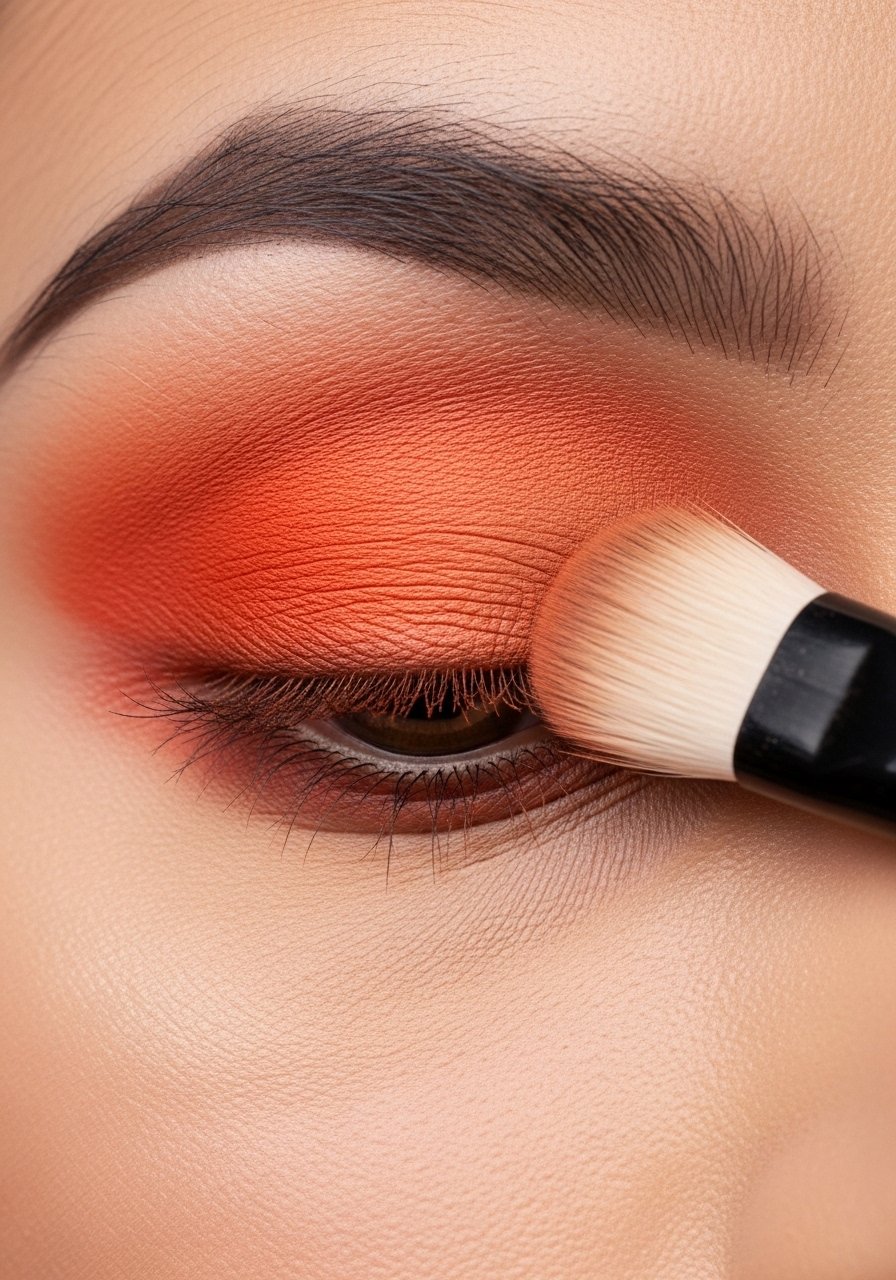
I switch to a clean fluffy brush and lightly buff the outer edge. I make tiny windshield-wiper motions and small circular taps. I move pigment outward, not inward over the lid center.
The edge becomes a gentle halo while the lid color stays vivid. People often over-blend until the color fades. One small mistake: scrubbing with pigment-loaded brush. That removes the center color. Keep the brush mostly clean and be patient.
Step 5: Add Depth and Balance for a Finished Look
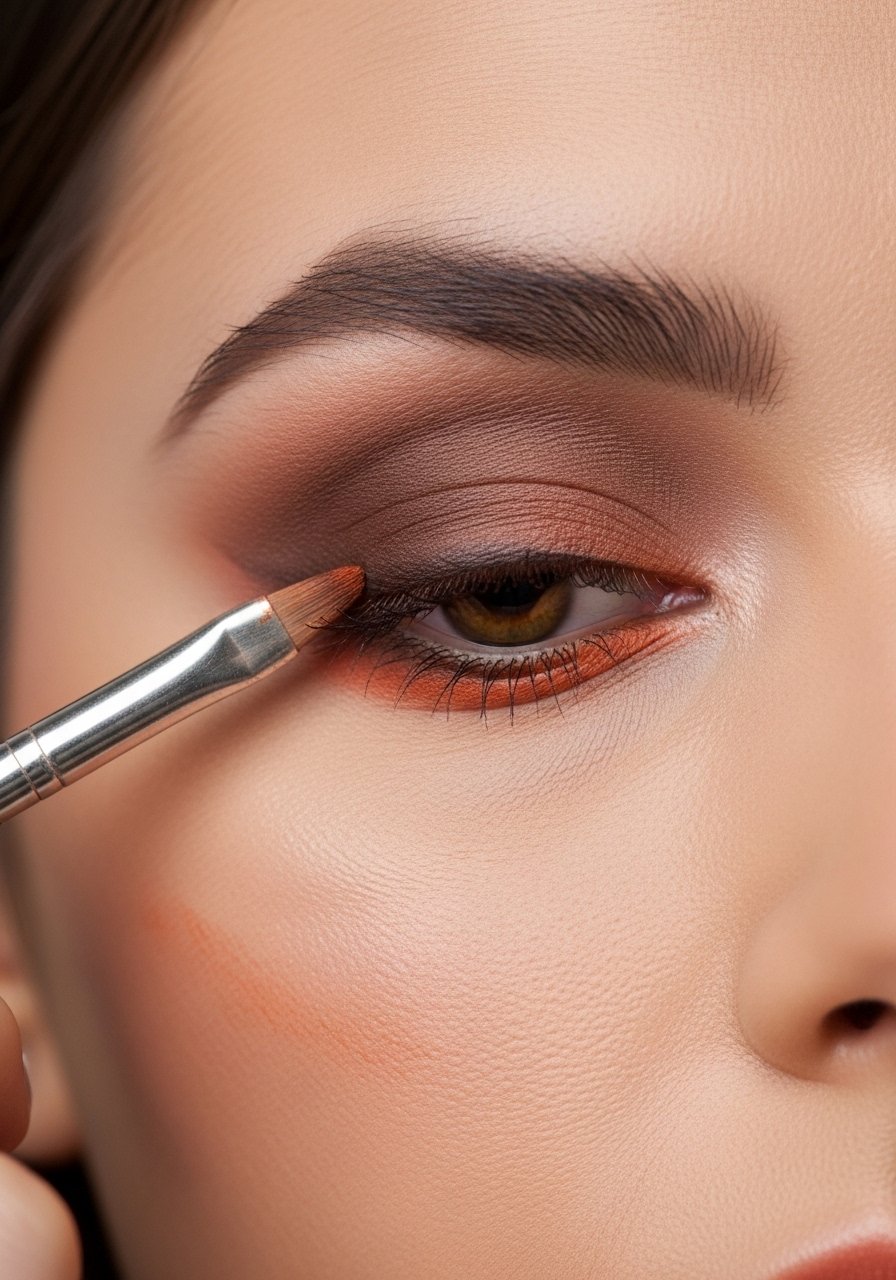
I deepen the outer corner with a small amount of warm brown. Then I smudge a touch of orange on the lower lash line with a pencil brush. I finish with a tiny inner-corner highlight and a light mist of setting spray to meld powders.
The look reads polished and pulled together. People miss balancing the lower lash line; it anchors the lid. One mistake: adding too much shimmer that fights the matte orange. Keep the highlight small and the finish cohesive.
Finish Notes: Texture and Skin Tone
Orange plays differently across skin tones and finishes. On fair skin, I keep the orange mid-tone and matte to avoid looking fluorescent. On deeper skin, I deepen the orange slightly or add a satin sheen so it reads warm and rich. I prefer matte for clean lines and satin for a soft glow.
Small adjustments:
- If your skin is cool, warm the orange with a soft brown rather than a bright yellow-orange.
- For mature lids, press color and avoid heavy sweeping to reduce texture.
Wear and Touch-ups
Orange can fade at the edges or collect in creases. My quick fixes are simple: a tiny clean brush to re-blend edges, a light layer of the packed orange to revive the lid, then a spritz of setting spray. Avoid reapplying thick layers midday.
Quick tips:
- Blot excess oil gently before touch-up.
- Use pressed pigment for stronger midday revival than powdery blends.
Common Mistakes and Quick Fixes
I see the same errors on repeat. Here’s how I fix them fast.
- Patchy center: pack pigment in thin layers with a flat brush.
- Hard edge: add a warm transition shade and buff with a clean brush.
- Too much shimmer: tone it down with a matte brown on the outer corner.
- Creasing: prime thinly and set the lid lightly with translucent powder before orange.
Final Thoughts
Start simple. Learn to prime, place a transition, pack the orange, then blend the edges. Practice is small, patient steps.
Trust your eye. A soft edge and a saturated lid look professional and wearable. Keep it easy and intentional.