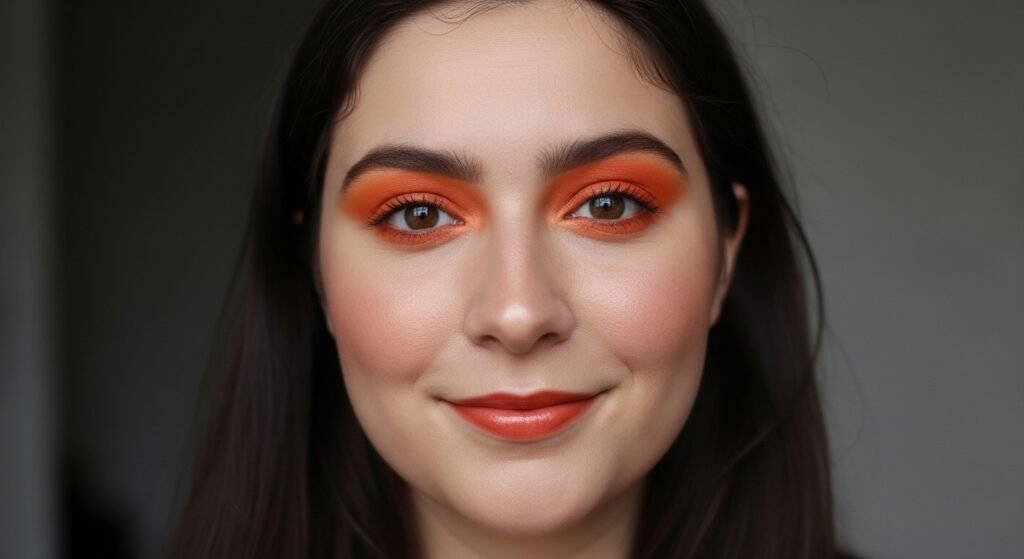
I used to love orange tones until my blush migrated to my temples by noon. My cheeks looked patchy and my eyes faded into a smudge. I wanted the glow without the fuss.
I learned to keep products cream-forward, place them with purpose, and blend with tools that respect skin texture. This is a practical orange look that actually lasts.
How to Do an Orange Makeup Look for a Fresh Glowing Face
This is the approach I use when I want warmth without looking like I tried too hard. You’ll learn which cream products to use, where to place color for lift, and how to keep the finish fresh all day. The result looks like sun-kissed skin, not costume makeup.
What You’ll Need
- Tinted Moisturizer (dewy, light coverage)
- Cream Bronzer Stick (blendable, warm)
- Cream Orange Blush (peachy-orange)
- Cream Orange Eyeshadow Stick (soft, buildable)
- Matte Warm Brown Eyeshadow (for soft depth)
- Cream Peach Highlighter (subtle sheen)
- Beautyblender Original (for cream blending)
- Fluffy Blending Brush (small, for eyes)
Step 1: Prep skin with a light, dewy base
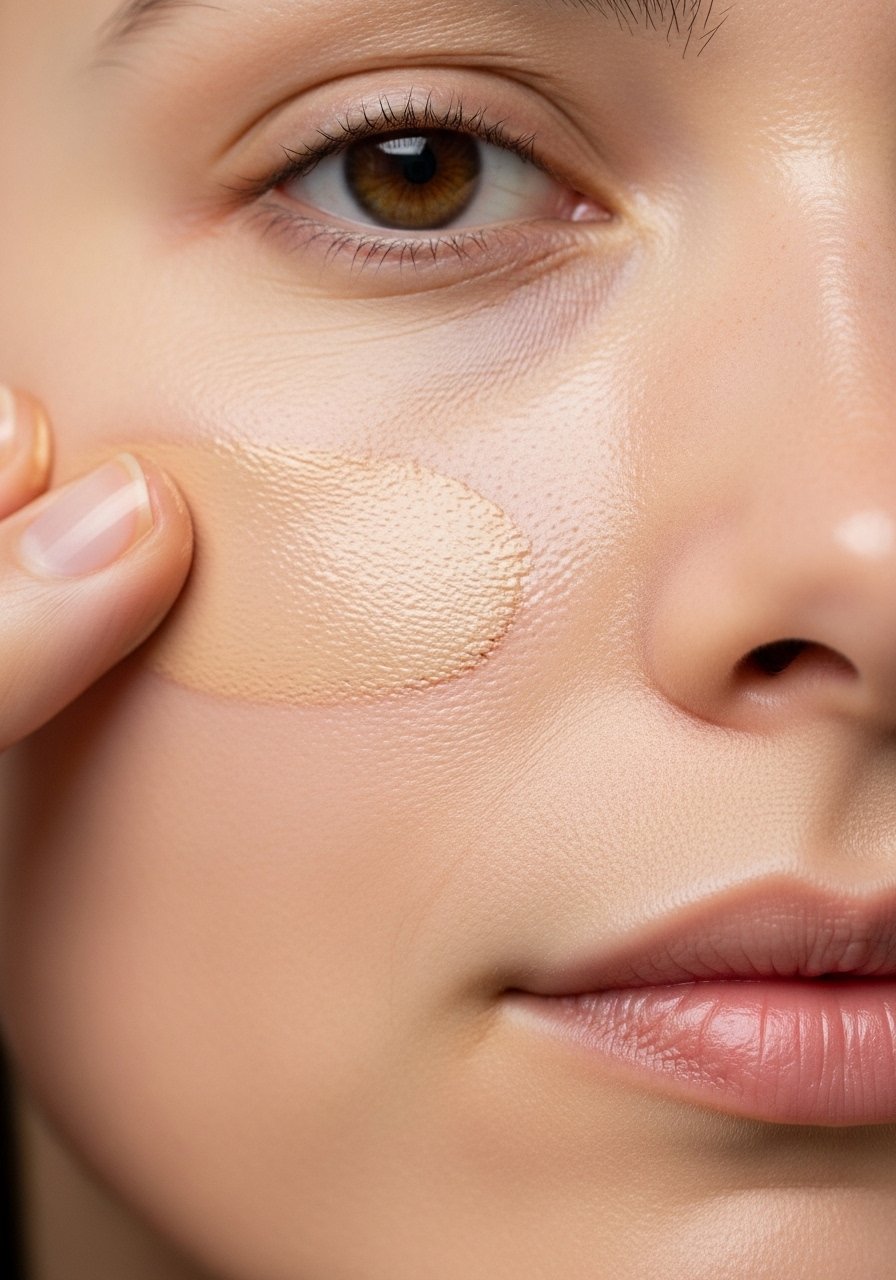
I start with a sheer, dewy tinted moisturizer so the orange tones sit on the skin instead of on top of it. I dampen my sponge slightly and press product in, focusing on where I want the glow: cheeks, forehead, nose. This keeps texture calm and lets cream color blend easier.
People often skip skin hydration and then get patchy cream color. Don’t overload—too much product under cream blush makes everything slide. One mistake: rubbing foundation around—pat to keep dew, not streaks.
Step 2: Warm the face with a cream bronzer
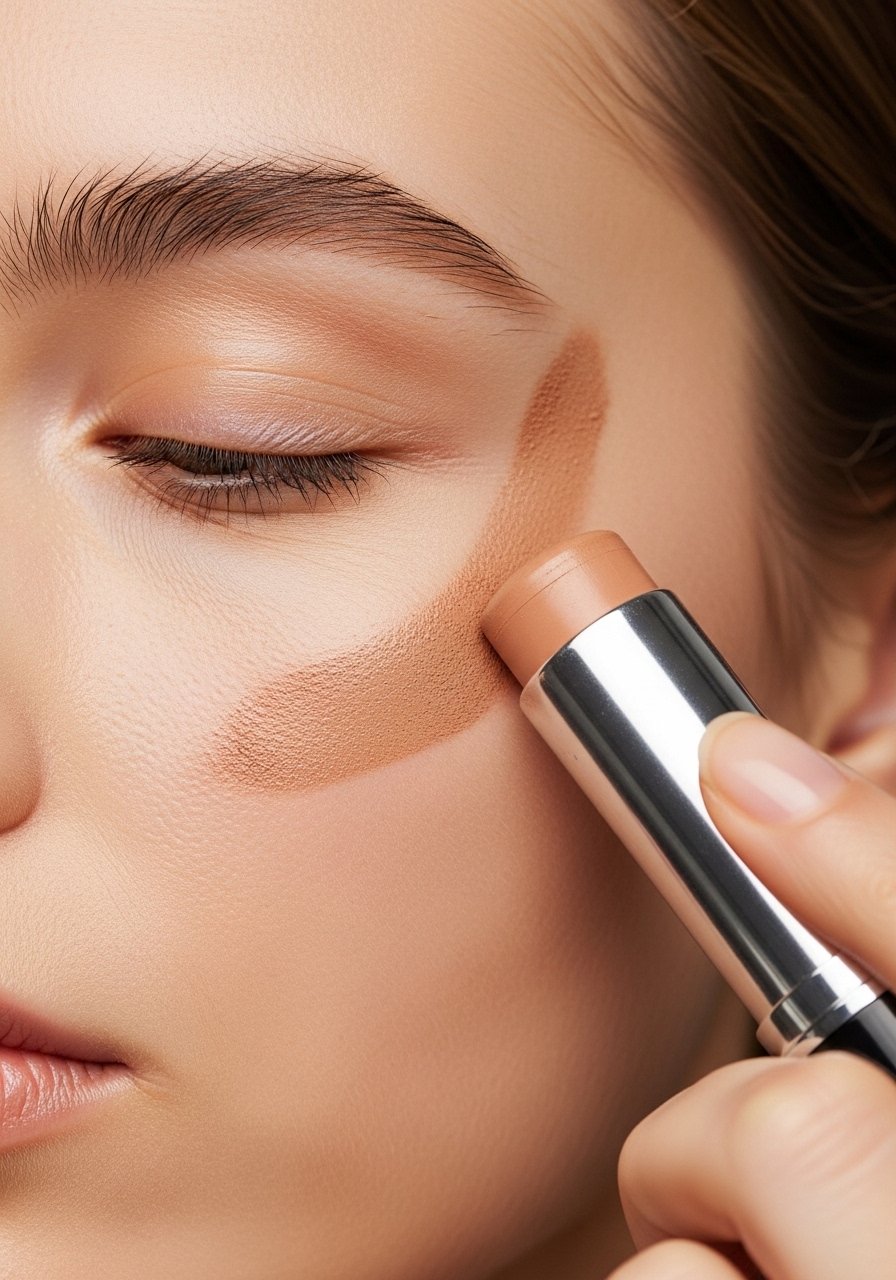
I apply a cream bronzer where the sun would naturally hit: temples, cheek hollows, jawline. I use the stick directly, then blend with my sponge or fingers in a soft, upward motion. This anchors the orange on the cheeks and keeps the warmth believable.
You’ll see immediate dimension and the skin reads warmer, not orange-only. Many people drag bronzer too low—avoid fossilizing the warmth under the jaw. A small mistake: leaving hard lines. Always soften with a damp sponge.
Step 3: Place cream orange blush for lift
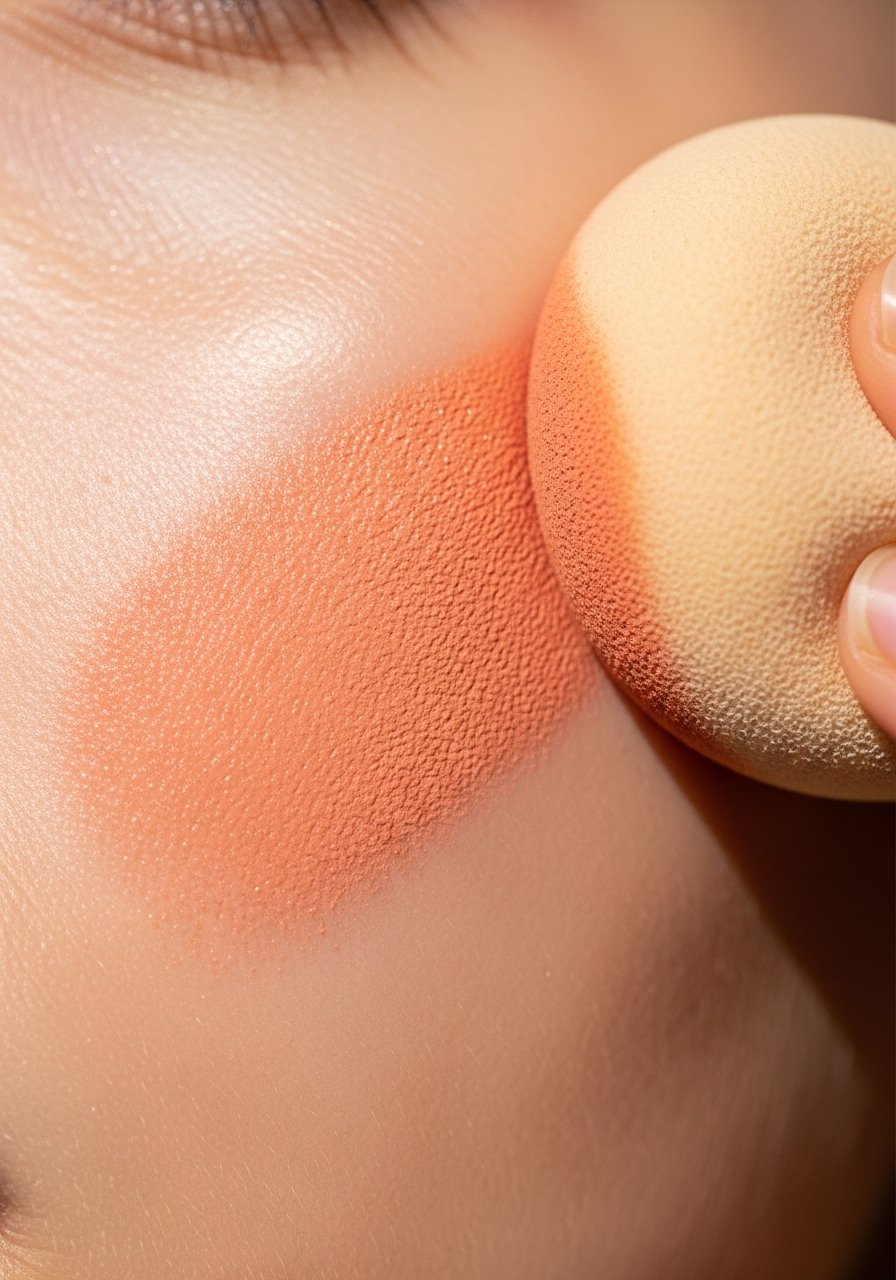
I smile and dab a small amount of cream orange blush on the apples, blending up toward the temple. I use my ring finger or a damp sponge to press and diffuse. The upward motion is what lifts; placing color low makes the face look heavy.
What changes is immediate—cheeks look alive and slightly sunburnt in a flattering way. A common miss: applying too much at once. Start small. The mistake I see a lot is trying to blend with a dry brush—use skin warmth or a damp sponge for a softer edge.
Step 4: Keep eyes soft with an orange wash and brown depth
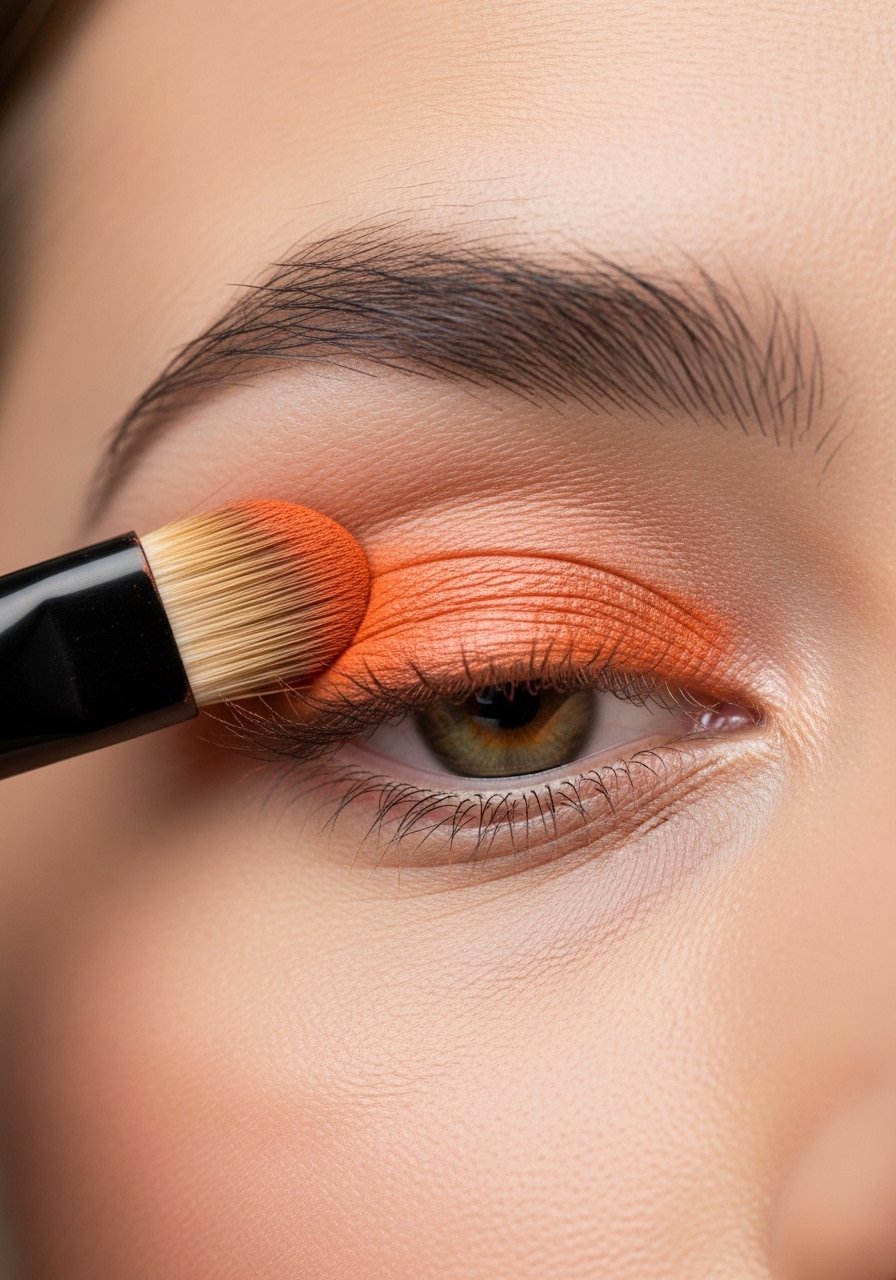
I swipe a cream orange eyeshadow across the lid, blending the edges into the socket with a fluffy brush. I add a touch of matte warm brown in the outer crease to ground the orange without making it harsh. I keep the lower lash line clean or very softly diffused.
This makes the eyes feel cohesive with the face—not separate pops of color. People often over-define the lower lash line; it can pull the eye downward. One mistake: packing opaque orange on the inner lid—use a thinner layer to avoid creasing and to keep it wearable.
Step 5: Add a cream highlight and soften transitions
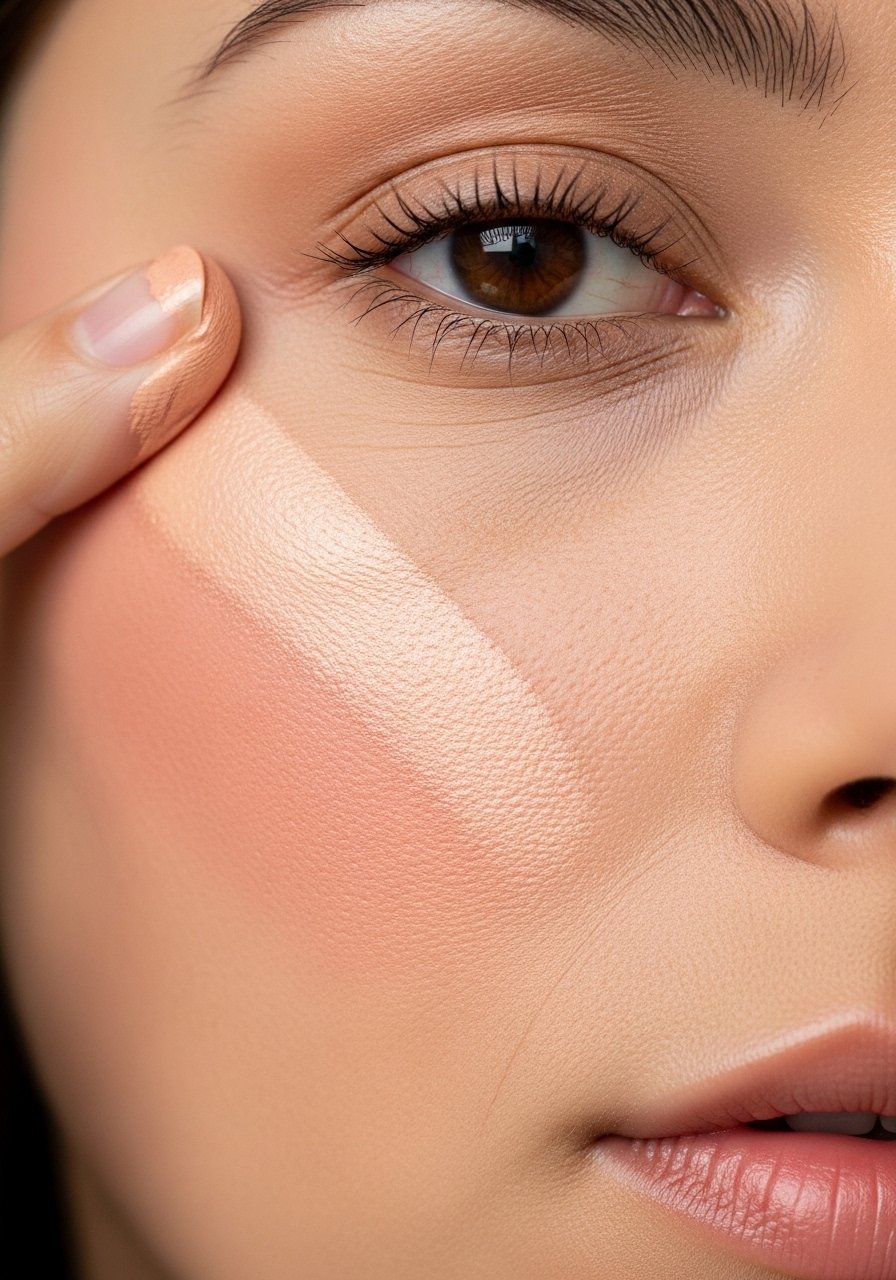
I tap a cream peach highlighter on the high points—cheekbones, brow bone, and the tip of the nose. Then I lightly bounce my sponge across the edges where blush meets bronzer to melt everything together. The cream sheen reads like skin, not glitter.
Visually, the face looks cohesive and fresh. A missed detail: not softening where products meet—those hard seams are what make a look contrived. Avoid heavy, frosty highlighters; they fight with the warm orange finish.
Step 6: Set with a dewy spray and a stained lip
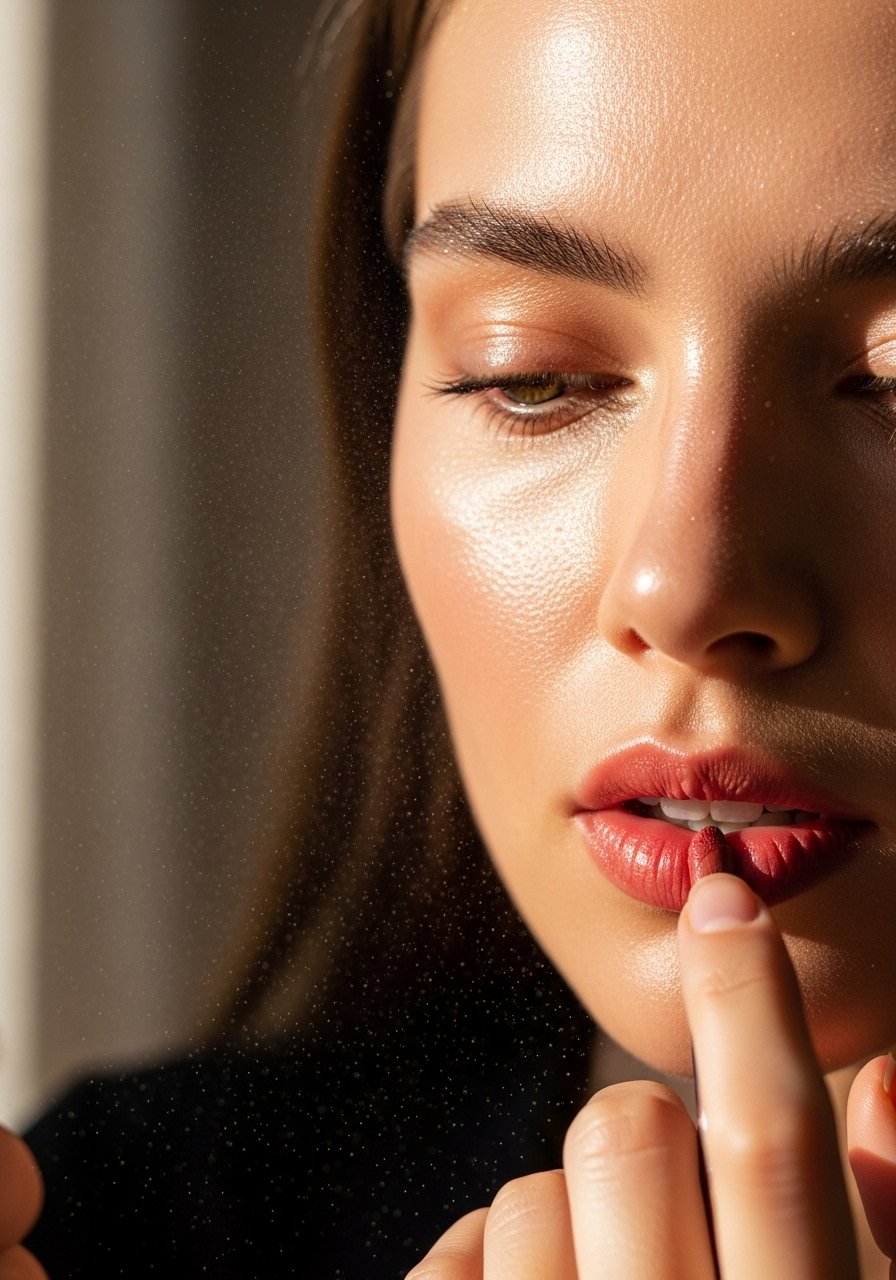
I finish with a light mist of dewy setting spray to settle powders and marry creams. Then I press a warm lip stain or tinted balm onto the lips with my finger for an effortless, matching tint. I skip heavy powder in the T-zone—this keeps the face soft.
This step locks the tones in place and makes the products look like one thing on the skin. The common mistake: over-setting with matte spray or powder. That flattens the glow you worked for. A small tip: reapply a dab of cream blush to cheeks mid-day if needed.
Finish Notes: Texture and Wear
Creams are forgiving because they move with skin. They layer better than powders on dry or normal skin. Expect slight settling by midday; that’s normal—blot, don’t pile on powder.
Quick wear tips:
- Tap a damp sponge over areas that look separated.
- Carry a tiny pot of cream blush for quick touch-ups.
Placement & Balance: Keep It Fresh
I aim to balance warmth: bronzer + blush + a soft eye wash. If one area is intense, tone it down elsewhere. The eye should echo the cheek without competing.
Simple rules I follow:
- Cheeks and lids share similar warmth.
- Keep lips softer than cheeks for a modern finish.
- Blend upward for lift, not down for heaviness.
Common Mistakes and How I Fix Them
People often overload product early. Layer thinly and build. I remove excess with a tissue, then reapply less. Another issue is texture mismatch—powder over creamy without blending. My fix: soften edges with a damp sponge.
Also:
- Don’t line the lower waterline with heavy brown—use pencil sparingly.
- Avoid matte everything; a touch of sheen keeps the look alive.
Final Thoughts
Start with one creamy orange product and add slowly. I keep the rest soft so the warmth reads fresh, not forced.
Trust the upward placement and skin-like finishes. It’s an easy way to look awake and balanced without much fuss.